Common Causes of Washing Machine Drainage Failure
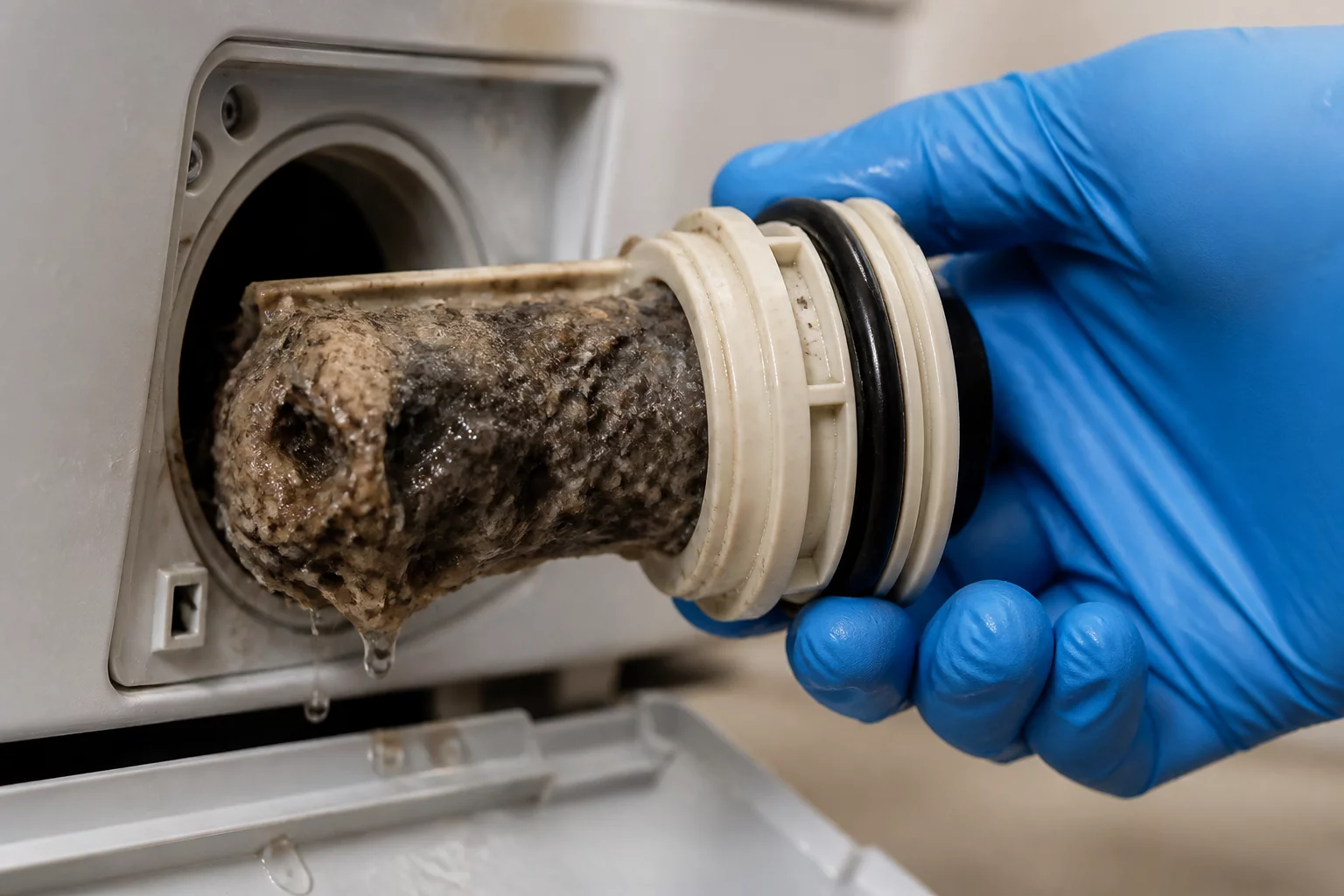
When a washing machine halts mid-cycle with water pooled inside the drum, the underlying fault usually stems from a mechanical blockage or a failed drainage component. Over time, pocket debris such as coins, hairpins, stray buttons, and lint accumulate inside the coin trap filter located near the bottom of the machine. When this filter clogs completely, the internal impeller cannot spin freely, leaving the wastewater unable to evacuate into the domestic waste line.
Key Diagnostic Note
Before unscrewing the drain filter or inspecting internal hoses, disconnect the power plug and prepare a shallow tray with towels. Washing machine drums retain several gallons of dirty water when a cycle is interrupted.
Drainage Pumps, Pressure Switches, and Blocked Hoses
Beyond simple filter clogs, mechanical and electrical faults frequently disable the drainage cycle. The corrugated drain hose at the rear can suffer from kinks, tight bends, or internal soap scum buildup. Furthermore, the water level pressure switch can fail to register water levels correctly, signaling the control board to halt pumping operations prematurely.
Impeller & Pump Inspection
Drain pumps rely on a small magnetic impeller. Threads and debris wrapped around the spindle prevent rotation, causing a distinct humming sound without moving water.
Drain Hose Height & Kinks
Improper drain hose elevation or sharp bends restrict water flow. Ensuring a smooth bend and correct standpipe height prevents back-siphoning and flow restrictions.
Step-by-Step Inspection Checklist
- Power down the appliance and safely drain residual water using the emergency drain tube next to the bottom debris filter.
- Unscrew the pump filter plug counterclockwise, extract trapped coins or lint, and spin the internal impeller by hand to confirm smooth rotation.
- Inspect the rear discharge hose for tight pinch points, obstructions, or blockages at the standpipe connection.
Customer Experiences & Discussion
3 InsightsSarah M.
Verified CustomerReviewed on Washing Machine Drainage Guide • 07/10/2026
Very helpful diagnostics advice for drainage issues
The troubleshooting instructions were completely spot on. Checking the drain pump filter directly solved our issue without needing replacement parts. Clear, safe, and actionable steps.
Leave a Comment
Share your feedback, appliance model observations, or questions with our technical team.