Understanding Ice Maker Faults & Production Failures
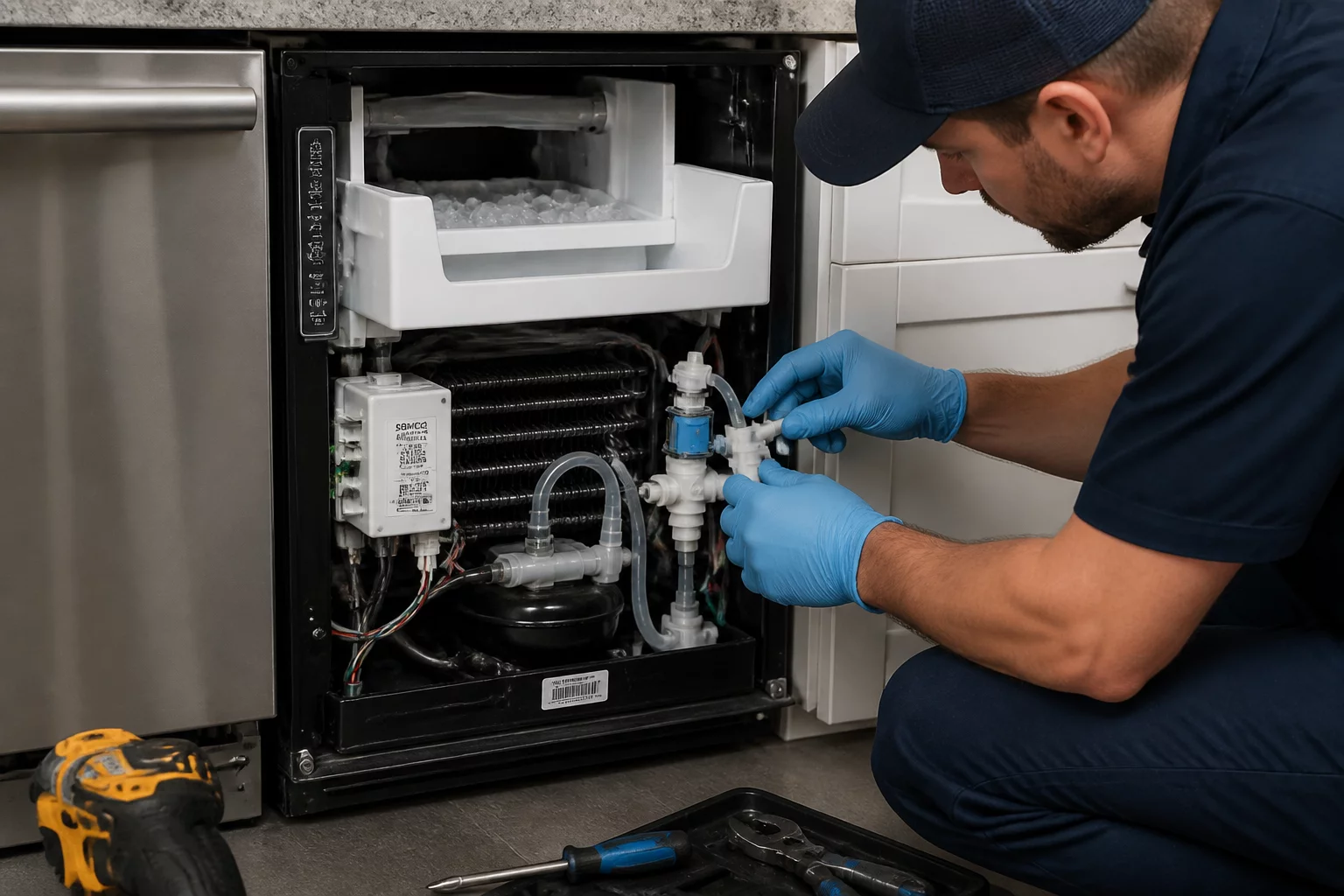
Ice makers rely on precise synchronization between electrical solenoids, internal water lines, cooling coils, and mechanical harvest motors. When water inlet pressures fluctuate or freeze lines clog, cube production halts entirely or yields deformed, undersized ice. In residential and commercial setups in Ajman, mineral accumulation from local water lines often accelerates valve blockage, causing unexpected overflow or complete freezing failure inside the harvest mold.
Key Diagnostic Note
Before replacing core electronics, inspect the water inlet solenoid valve and the fill tube. A restricted screen or frozen line often mimics compressor failure by preventing water from reaching the ice mold during the timed filling sequence.
Core Engineering & Component Restoration
Our technicians handle full disassembly, descaling, and electronic calibration of leading ice maker models. From testing the mold heating element that releases ice cubes during harvest cycles to calibrating bin thermistors and water control valves, we restore full operational capacity with original replacement parts.
Water Valve & Solenoid Servicing
Replacing clogged solenoids and clearing frozen delivery tubes to ensure correct water volume during each filling phase.
Ejector & Gearbox Rebuild
Fixing jammed harvest sweeps, stripped motor gears, and faulty thermal sensors inside the ice tray module.
Step-by-Step Inspection Checklist
- Verify incoming water line pressure maintains at least 20 PSI to engage the inlet valve diaphragm properly.
- Test the ice mold thermostat for proper continuity when the internal temperature drops below 15°F (-9°C).
- Inspect the mechanical shutoff arm and optic bin sensor to confirm harvest cycles are not mistakenly paused.
Customer Experiences & Discussion
0 InsightsLeave a Comment
Share your feedback, appliance model observations, or questions with our technical team.